
Replacing an aging roof remains a highly significant financial investment for any property owner. You might look at your property and wonder exactly how long do asphalt shingle roofs last before failing completely. Understanding the average asphalt shingle roof lifespan is essential for maintaining your property’s value and achieving long-term structural protection.
Standard asphalt materials usually provide reliable weather protection for roughly fifteen to thirty consecutive years of continuous service. However, proactive maintenance routines and optimal attic ventilation conditions can stretch that expected timeline significantly. Understanding the specific variables that impact your roofing material durability helps you make much smarter long-term financial decisions.
Evaluating Material Durability: Comparing Different Shingle Categories
Not all asphalt materials deliver the identical level of long-term durability or weather resistance for your residential property. Manufacturers produce several distinct grades of shingles, and each option offers a completely different expected functional product lifespan. Choosing the right product requires balancing your immediate roof replacement cost with your long-term residential goals.
3-Tab Asphalt Shingles: Entry-Level Roofing Material Durability
Three-tab shingles represent the absolute most affordable and basic roofing option available on the residential market today. These lightweight materials typically last between fifteen and twenty years under normal weather conditions. When considering the total roof replacement cost, these materials offer the lowest barrier to entry for homeowners on a strict budget.
While they are cost-effective, they are also thinner and have a lower wind resistance rating than their modern counterparts. In regions prone to high winds or severe storms, these shingles may show signs of wear much earlier than the twenty-year mark.
Architectural Asphalt Shingles: High-Performance Roofing Solutions
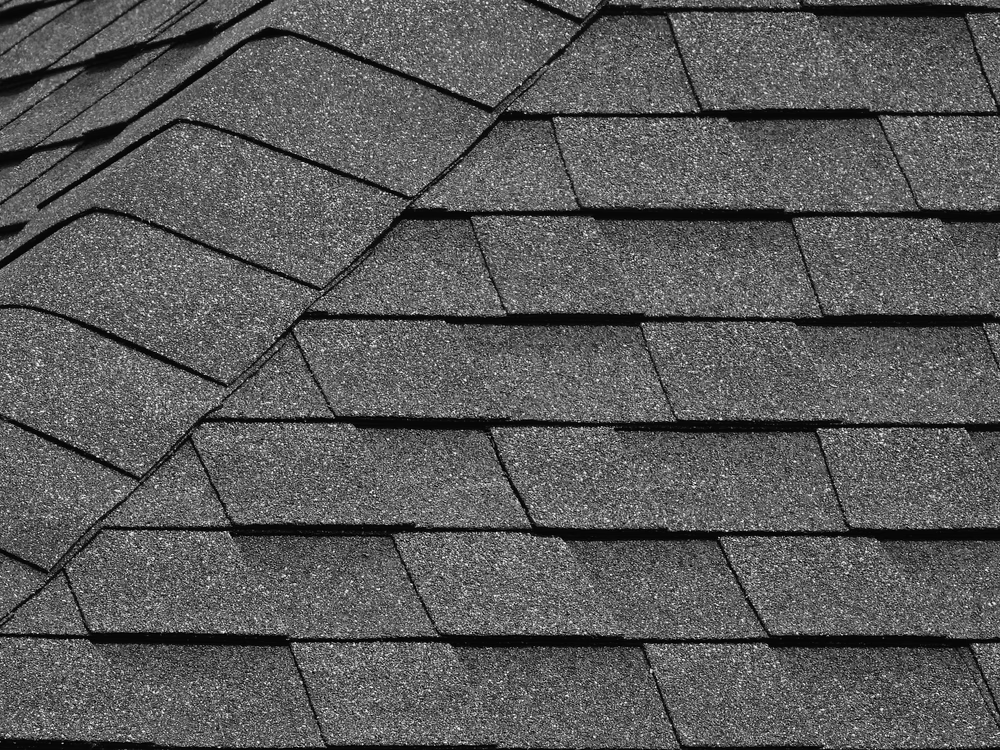
Architectural shingles are currently the most popular roofing material chosen by homeowners across the country. You can expect these thicker, dimensional materials to protect your home reliably for twenty-five to thirty consecutive years. Manufacturers laminate multiple layers of asphalt together, which creates a heavier product that resists intense wind uplift effectively.
The dimensional profile of these products also mimics the highly attractive look of natural wood shakes or slate. This aesthetic upgrade significantly improves the curb appeal of your property without requiring expensive structural reinforcements. Most professional contractors, including the experts at Award Roofing, highly recommend this specific product tier for the best balance of cost and longevity.
Luxury and Premium Asphalt Shingles: Maximum Roof Longevity
Luxury shingles sit at the top of the residential asphalt roofing hierarchy. These heavyweight materials boast an incredibly impressive functional lifespan ranging from thirty to fifty consecutive years. While they cost substantially more upfront, their extended lifespan provides excellent long-term financial value for permanent residents.
Beyond their durability, luxury shingles are designed to be much thicker and more “multi-dimensional,” providing a high-end architectural look that can significantly increase the resale value of a premium property.
Key Variables Influencing Performance and Longevity
Even the highest quality materials can fail prematurely if external environmental conditions work aggressively against their structural integrity. Several critical environmental and mechanical factors determine whether your residential roof actually reaches its maximum physical life expectancy.
Regional Climate and Weather Resistance
Your geographic location plays a massive role in how fast your exterior roofing materials degrade. Homes located in sunny southern regions face intense ultraviolet radiation that bakes the asphalt materials. This constant heat exposure causes shingles to dry out, lose their flexibility, and eventually crack.
Conversely, houses situated in northern climates endure brutal freeze-thaw cycles that expand and contract the materials. High winds, frequent hail storms, and heavy snow loads also strip away protective surface granules prematurely. Our roofers in Milton, GA leverage their regional expertise to help homeowners select materials specifically rated for local weather extremes, making sure the roof doesn’t succumb to the climate ahead of schedule.
Attic Ventilation and Roofing System Health
Many homeowners ignore their attic space, but this area directly dictates the health of the entire roofing system. Poor ventilation traps extreme heat and excess moisture inside the structure. During hot summer months, an unventilated attic literally bakes your expensive asphalt shingles from the inside out.
In the winter, trapped internal moisture leads to condensation that rots the underlying wooden roof deck. Proper airflow keeps the system cool and prevents asphalt adhesives from breaking down prematurely. Adding adequate intake and exhaust vents remains one of the most effective ways to protect your exterior roofing investment.
Professional Installation and Workmanship
A premium roofing product installed poorly will almost always fail faster than a basic product installed perfectly. Roofing contractors must follow exact manufacturer specifications regarding correct nail placement, underlayment application, and essential metal flashing details. Driving nails too high on the shingle strip prevents them from gripping the material securely against high winds.
Hiring a certified roofing company in Johns Creek guarantees your chosen materials perform exactly as the original manufacturer intended. Proper flashing around chimneys and vent pipes prevents rainwater from destroying the underlying wooden decking; a common issue caused by subpar workmanship.
Always ask your roofing contractor to verify your attic ventilation calculations before installing new asphalt shingles. Adding proper ridge and soffit vents costs very little upfront but adds decades to your roof’s lifespan.
Visual Signs and Indicators for Roof Replacement
Recognizing the early warning indicators of imminent roof failure helps prevent expensive interior water damage. Spotting these structural problems early gives you plenty of time to secure proper home improvement project funds.
Granule Loss and Surface Wear
The rough mineral granules on the surface of your shingles protect the fragile asphalt layer from destructive sunlight. As your roof ages, these tiny stones slowly wash away during heavy rainstorms. You might eventually notice thick accumulations of black granules gathering near the bottom of your aluminum gutter downspouts.
When large bald patches appear across the shingles, the exposed asphalt will deteriorate rapidly under direct ultraviolet sunlight. At this advanced stage, the material loses its waterproofing capabilities and requires immediate professional attention.
Physical Damage: Curling, Cracking, and Missing Shingles
Healthy asphalt shingles should always lie perfectly flat against the wooden roof deck to shed rainwater effectively. When the edges begin curling upward or the centers buckle, the materials have reached their physical limit. Long horizontal cracks indicate that the interior fiberglass matting underneath the asphalt has become brittle and fractured.
If you spot entire shingle strips missing after a severe storm, the factory adhesive strips have likely failed. Wind easily catches these loose edges, tearing away large sections of your protective roof. You must replace these compromised sections immediately to prevent rainwater from rotting your attic insulation.
Essential Maintenance Tips to Extend Lifespan
Proactive home maintenance remains the absolute most effective strategy for preserving your exterior building materials. A few simple seasonal practices can easily add five to ten years of highly reliable performance.
Step-by-Step Guide: How to Maintain Your Asphalt Shingle Roof
- Clean Your Gutters Regularly: Clogged gutters force rainwater to back up underneath the bottom row of your shingles. Remove leaves and debris twice a year to maintain proper drainage away from your vulnerable roof fascia.
- Trim Overhanging Tree Branches: Low-hanging limbs scrape aggressively across the roof surface during windy days, tearing away protective granules. Cut back any large branches within ten feet of your roofline.
- Remove Algae and Moss Growth: Moss acts like a sponge, holding moisture against your shingles long after the rain stops. Apply a gentle chemical treatment to kill the organic growth without using a damaging high-pressure water hose.
Routine professional roof inspection services, such as those provided by the Award Roofing team, catch minor structural issues long before they develop into massive interior leaks. Fixing relatively small vulnerabilities, like replacing individual damaged shingles or resealing loose flashing, consistently costs a fraction of what a full roof replacement requires.
Navigating Roofing Warranties and Material Protection
Reading the fine print of roofing warranties prevents unpleasant financial surprises when materials fail unexpectedly. Most manufacturers advertise “lifetime” warranties, but this specific terminology often confuses property owners. In the roofing industry, a lifetime warranty usually covers the materials for as long as you own the home.
However, this coverage strictly applies to factory manufacturing defects rather than normal environmental weathering or storm damage. You must also pay close attention to the specific proration schedule. During the first ten to fifty years, depending on the shingle tier, manufacturers provide full non-prorated coverage. This means the manufacturer pays for both replacement materials and the labor required to install them properly. Once this period expires, the financial coverage value drops significantly every subsequent year.
Never allow anyone to use a power washer on your residential asphalt shingle roof under any circumstances. The intense water pressure strips away the protective granules and instantly voids most manufacturer material warranties.
Conclusion
The true functional lifespan of your roofing system depends heavily on a combination of material selection and care. Standard architectural shingles generally provide twenty-five to thirty years of highly dependable protection. However, negative factors like extreme weather, poor attic ventilation, and neglected maintenance quickly reduce that expected timeframe.
Take the necessary time to evaluate your current roof visually and check for early warning signs of deterioration. Contact Award Roofing today for a professional health check, staying proactive is the key to keeping your home dry and protected for decades to come.