
Between the shingles and the plywood deck sits a layer that decides whether a wind-lifted shingle becomes a ceiling stain or a non-event. That layer is the underlayment, and the choice comes down to asphalt-saturated felt paper or a woven synthetic sheet. Award Roofing installs both, and the performance gap shows up most clearly during the two scenarios that matter in North Georgia: a summer downpour on an exposed deck, and a wind event that strips shingles off a section of slope.
Homeowners comparing bids from roofing companies in Cumming often see a $400 difference between two otherwise identical proposals, and underlayment is frequently the reason. Understanding what that line item buys makes the comparison far easier.
What the Underlayment Layer Is Actually For
Shingles are the primary water barrier, but they are a shedding system, not a sealed one. Wind-driven rain pushes water sideways under shingle tabs, ice and debris dams force water backward up the slope, and any missing shingle exposes bare deck until a crew arrives. Underlayment is the secondary water barrier that handles all three situations.
It also performs two quieter jobs. It separates the resins in asphalt shingles from the wood deck, which prevents premature drying, and it protects the sheathing during the days between tear-off and the final shingle course. The International Residential Code requires underlayment on every asphalt shingle roof, so the question is never whether to install it, only which type.
Asphalt-Saturated Felt: The Hundred-Year Default
Felt paper is an organic or fiberglass mat soaked in asphalt, manufactured to ASTM D226 or D4869 standards. It arrives in two common weights.
- No. 15 felt: roughly 8 pounds per square (100 square feet), sold in 4-square rolls, the budget option on many re-roof bids.
- No. 30 felt: roughly 15 to 20 pounds per square, noticeably thicker, more tear-resistant, and the better of the two felt choices.
Felt has a long track record and costs very little, generally $0.05 to $0.15 per square foot in material. Its weaknesses are physical rather than theoretical. Felt absorbs water, and once it does, it wrinkles and buckles into ridges that telegraph through the finished shingle surface. It also becomes brittle in attic heat, and North Georgia attics routinely reach 130 to 150 degrees in July.
Synthetic Underlayment: Woven Polypropylene Under the Shingles
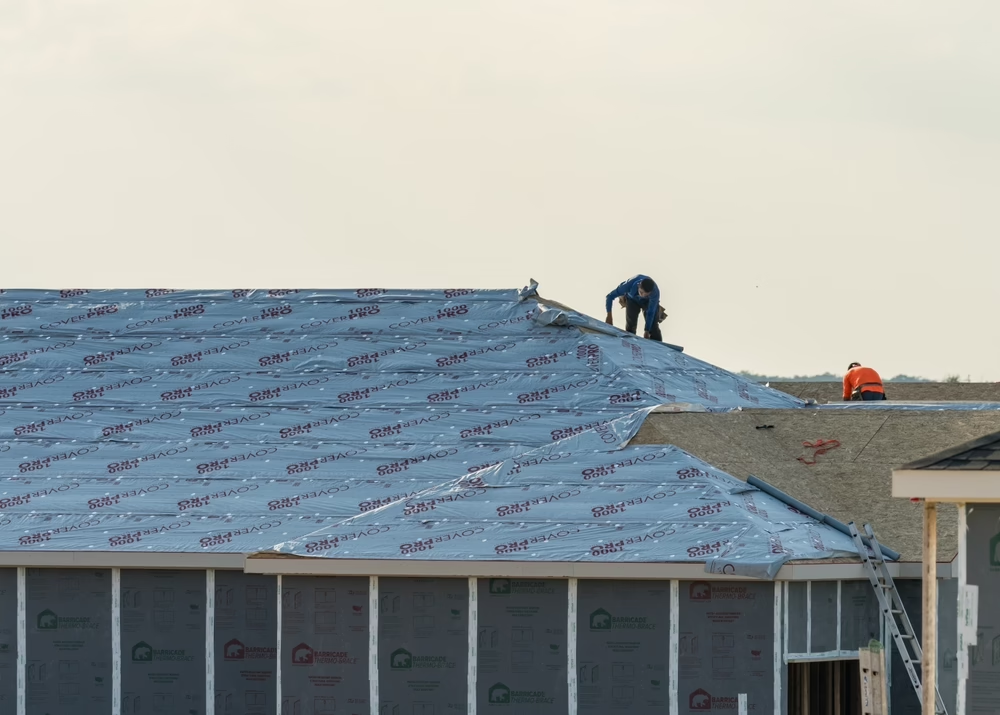
Synthetic underlayment is a woven or spun polypropylene or polyethylene sheet, usually with a coated top surface for traction. A single roll typically covers 10 squares and weighs 25 to 35 pounds, compared with roughly 30 pounds for a 4-square roll of felt. That weight difference matters on a steep slope, because fewer roll changes mean fewer seams and faster dry-in.
Material cost runs about $0.15 to $0.35 per square foot. On a 30-square roof, the typical upgrade from No. 15 felt to a mid-grade synthetic adds roughly $250 to $600 to the job, including the labor savings that partially offset the material premium.
Tear Resistance Around Fasteners and Along Edges
Tear strength is where the two products separate most dramatically. Felt tears readily once a cap nail or staple is loaded sideways by wind, and the tear tends to propagate along the roll. Most synthetics carry tear ratings several times higher than No. 15 felt, and the woven scrim resists fastener pull-through rather than splitting from the hole outward.
The practical consequence appears after a storm. When wind removes a dozen shingles from a slope, a synthetic layer frequently stays intact and keeps the deck dry until a crew performs a roof repair in Cumming, GA. Felt in the same situation often shreds along the exposed course, which turns a shingle-only repair into a deck and insulation problem. The Insurance Institute for Business & Home Safety has built its sealed roof deck recommendations around exactly this failure path.
UV Exposure Tolerance During the Exposed Window
Every re-roof has a period when the underlayment is the only thing on the deck. On a straightforward job, that window is a few hours, but material delays, afternoon thunderstorms, and multi-section projects can stretch it to several days.
- Felt paper: most manufacturers limit exposure to a matter of days. Sun drives off the lighter oils, the sheet curls at the laps, and a heavy rain soaks the mat through.
- Synthetic underlayment: UV ratings commonly run 90 to 180 days, with some premium products listed at 12 months.
- Foot traffic: coated synthetics hold traction when damp, while wet felt becomes genuinely hazardous, which is a safety issue as much as a material one.
For a phased project, or for a homeowner who needs a temporary dry-in while an insurance claim is settled, that exposure rating is the deciding factor. Crews handling roof repair in Alpharetta, GA after a hail event often dry in a damaged slope with synthetic specifically because it can sit for weeks without degrading.
Long-Term Leak Protection in a Wet, Hot Climate
Forsyth and Fulton counties see roughly 50 to 55 inches of rain a year, and much of it arrives in short, intense summer storms. That pattern loads the roof assembly with wind-driven water repeatedly, year after year, while attic heat works on the materials from below.
Felt installed in 1998 and pulled off a deck today usually comes up in brittle fragments. Synthetic sheets from the mid-2000s generally come off intact and flexible, which is reasonable evidence of how each ages in place. Neither product is a substitute for correct flashing details, and a failed pipe boot will still leak through any underlayment, which is why delayed flashing repairs remain the most expensive small problem on a residential roof.
Where Peel-and-Stick Membrane Still Belongs
Synthetic underlayment does not replace self-adhering ice and water membrane. Most quality roof installations in Cumming, GA use a layered approach:
- Self-adhering membrane in valleys, around chimneys and skylights, and along eaves where backed-up water collects.
- Synthetic underlayment across the remaining field of the deck, lapped 4 to 6 inches horizontally per the manufacturer’s printed lines.
- Cap nails or plastic-cap fasteners rather than staples, which pull through under uplift far sooner.
Low-slope sections between 2:12 and 4:12 require doubled underlayment under most codes, and that detail is a common shortcut on cheap bids. Ask any contractor to point to the specific product name and fastener pattern in writing.
Frequently Asked Questions
Is Synthetic Underlayment Worth the Extra Cost?
On a typical 30-square home, the upgrade adds roughly $250 to $600, which is about 2 to 4 percent of a full replacement. For that money, the deck gains several times the tear strength and months of UV tolerance instead of days, so most homeowners find the trade reasonable.
How Long Can Synthetic Underlayment Stay Exposed?
Most synthetic products are rated for 90 to 180 days of UV exposure, with premium grades listed up to 12 months. Felt, by comparison, should be covered within a few days, and it will wrinkle after the first soaking rain.
Does Building Code Allow Synthetic Underlayment?
Yes, provided the product carries a code evaluation report or complies with the referenced ASTM standards. Reputable manufacturers publish that listing on the roll and in their installation instructions, and the National Roofing Contractors Association addresses both material types in its guidance.
Can Underlayment Be Replaced Without Replacing the Shingles?
Not practically, because shingles are nailed through the underlayment and cannot be lifted without damage. Underlayment is replaced during tear-off, or during a sectional repair after storm damage or a partial roof collapse.
What Thickness of Felt Should Be Used If Felt Is Chosen?
No. 30 felt, not No. 15, on any roof expected to last past 20 years. The heavier mat resists tearing at fasteners and holds its shape better through wetting cycles, for roughly $100 to $200 more on an average home.
Ask About the Underlayment on Your Next Roof Quote
Award Roofing specifies the underlayment type, fastener pattern, and membrane locations on every written estimate, so homeowners can compare bids on something more meaningful than a final number. Contact Award Roofing to walk your roof and review what is currently sitting under your shingles.