
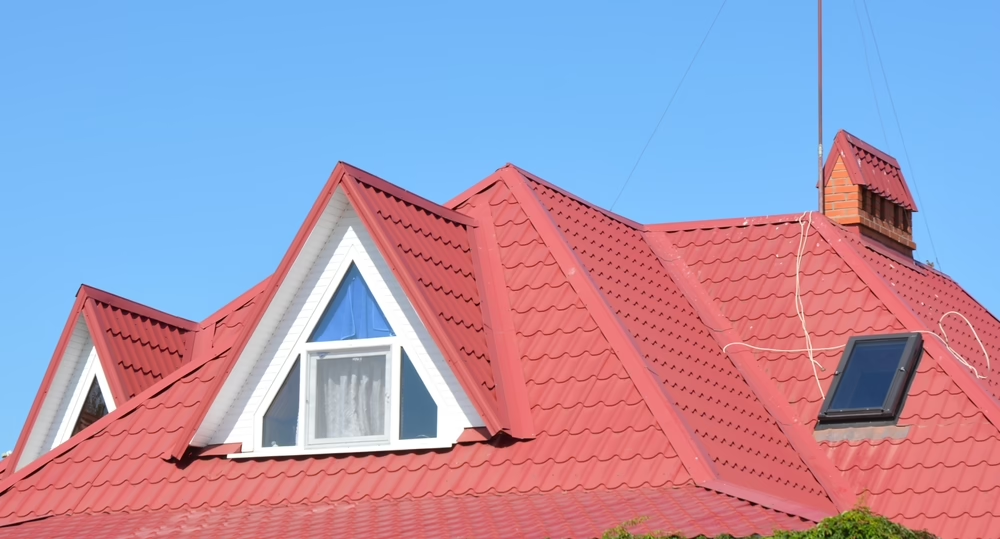

A roof valley carries the runoff from two slopes at once, so a 30-foot valley on a moderately pitched home can move several hundred gallons of water during one thunderstorm. That concentration of flow is why valleys leak more often than any other field area of a roof, and why the valley detail matters so much during a roof replacement. When consulting with the experts at Award Roofing, homeowners typically evaluate two common approaches, a woven shingle valley and an open metal valley, which perform very differently once pine straw and heavy rain enter the picture.
Why Valleys Fail Before the Rest of the Roof
Water speeds up as it funnels into a valley, and velocity turns ordinary runoff into something closer to a small stream. Granules abrade off the shingle surface in that channel, the exposed asphalt dries out, and the wear strip down the center thins years before the surrounding field does.
Debris makes the problem worse. Oak leaves and pine needles settle in the channel, hold moisture against the shingle for days, and dam water sideways under the courses during the next storm. Most valley leaks we open up started with that combination rather than with a single dramatic event.
How a Woven Valley Is Built
In a woven valley, shingle courses from both roof planes are run through the valley and interlaced, alternating one side over the other. No metal shows, and the shingle surface carries the water the whole way down to the gutter. It is a long-standing method, and when it is done with flexible three-tab shingles over a self-adhered membrane, it performs reasonably well.
The method has real limits on modern roofs:
- Shingle stiffness: laminated architectural shingles are thick and rigid, and several manufacturers restrict or prohibit weaving them because the shingle bridges instead of bedding into the valley.
- Voids under the lap: a bridged shingle leaves an air gap that wind-driven rain can push water into.
- Fastener placement: nails land closer to the centerline than anyone would like, and every nail near a water channel is a future entry point.
- Granule loss: the woven surface is asphalt, and asphalt wears where water runs fastest.
A closed-cut valley is the common cousin of the woven detail. One plane runs through, the other is cut back about two inches off the centerline, and the result looks similar from the ground while being easier to install cleanly with laminated shingles.
How an Open Metal Valley Is Built
An open metal valley lines the channel with a formed metal pan, usually 24-gauge galvanized steel, Galvalume, or aluminum, and sometimes copper on higher-end homes. The pan sits on a 36-inch-wide self-adhered ice and water membrane, and the shingles are cut back on both sides so three to six inches of metal stays exposed. Good practice widens that exposure roughly an eighth of an inch per foot toward the eave, so the channel grows as the volume grows.
The pan is held with clips or nails placed at the outer edges, never through the water path. Most quality installations use a W-profile pan, where the raised center rib stops water from one slope crossing under the shingles on the other side during heavy rain. The National Roofing Contractors Association documents open valley metal as a standard detail precisely because the water never touches a cut shingle edge.
Debris Shedding in a Pine and Oak Climate
This is where the two details separate most clearly for homeowners around Alpharetta. Smooth metal lets pine needles and leaf litter slide, especially on pitches of 6:12 and steeper, while a woven valley presents a textured granular surface that catches and holds the same debris.
On lots with mature loblolly pines or water oaks, a woven valley can hold a packed mat of needles through an entire winter. That mat traps moisture, encourages algae and moss, and backs water up under the shingle laps. Open metal valleys still collect some debris at the eave end, particularly if the gutters are undersized, which is one reason the sequence of roof and gutter replacement is worth planning before either job starts.
Durability and Expected Service Life
A properly fastened 24-gauge galvanized or Galvalume valley pan typically lasts 30 to 40 years, which outlives most architectural shingle roofs. Copper runs 60 years or more and is the reason older homes still have original valleys under replaced shingles.
Woven and closed-cut valleys generally show visible wear at 12 to 20 years, depending on tree cover, pitch, and sun exposure. The shingles themselves may be rated for 30 years, but the valley rarely gets there without granule loss down the center. That mismatch is often what turns a localized issue into a question about repair versus full replacement.
What Each Valley Detail Costs
Woven and closed-cut valleys add almost nothing to a shingle roof beyond labor, since the material is already on the roof. Open metal costs more, though less than most homeowners expect:
- Galvanized or Galvalume pan: roughly $5 to $12 per linear foot installed, including the membrane underneath.
- Typical home with 40 to 60 feet of valley: about $250 to $700 added to the project.
- Copper valley: commonly $20 to $40 per linear foot, so $900 to $2,400 on the same house.
- Valley-only repair later: $600 to $1,800 per valley, since surrounding courses must be opened and reset.
Spread across a 25-year roof, the metal upgrade usually costs less per year than one mid-life valley repair.
Appearance From the Street
Woven and closed-cut valleys read as a continuous shingle field, which suits traditional brick and stucco elevations where the roof is meant to be quiet. Open metal draws a visible line down the roof, and that line can look deliberate and crisp or busy, depending on the color pairing.
Painted steel in weathered wood, charcoal, or bronze blends with most shingle colors at normal viewing distance. Bright mill-finish galvanized stands out considerably more, especially on light shingles, and copper develops a green patina over roughly 15 to 25 years that some owners want and others do not expect. Looking at completed homes in your area, such as the examples in our portfolio of recent roofing work, is more useful than looking at a color chart.
Choosing the Right Valley for Your Roof
A few conditions point strongly toward open metal:
- Heavy tree cover over the valley, especially pines that drop needles year-round.
- A long valley that collects runoff from two large planes, or a valley fed by an upper roof section.
- A low-slope valley under 4:12, where water moves slowly and lingers.
- Laminated shingles that the manufacturer does not approve for weaving.
- Any valley that has already leaked once with a shingle-on-shingle detail.
Closed-cut remains a sound choice on short, steep, open valleys with little debris load and a tight budget. The one detail that is non-negotiable either way is the self-adhered membrane beneath, which the Asphalt Roofing Manufacturers Association treats as standard practice in valleys. Crews providing roofing services in Milton, GA, see enough tree debris that the metal upgrade pays for itself on most properties.
Frequently Asked Questions
Which Valley Type Lasts Longer?
Open metal valleys last 30 to 40 years in galvanized or Galvalume and 60 years or more in copper, compared with 12 to 20 years of useful life for a woven or closed-cut valley. The difference comes down to granule abrasion, since asphalt wears in the fastest-moving water on the roof.
Can Architectural Shingles Be Woven?
Many laminated shingle manufacturers restrict or prohibit weaving, because the thick, stiff shingle bridges the valley instead of lying flat. Installing a woven valley against those instructions can void the material warranty, which is why closed-cut or open metal is standard on most new installations.
What Metal Gauge Should an Open Valley Use?
Twenty-four gauge steel is the common standard, with 26 gauge acceptable on short valleys and aluminum sized at .024 to .032 inches. Thinner material oil-cans in the sun and dents under ladder or foot traffic, so the heavier gauge is worth the small upcharge.
Do Open Metal Valleys Leak More Than Woven Ones?
No, open metal valleys leak less in most field conditions, provided the pan has a center rib and fasteners stay outside the water channel. Leaks in metal valleys usually trace to nails driven through the pan or to an end lap that was not sealed and overlapped at least six inches.
Can a Valley Be Upgraded Without Replacing the Whole Roof?
Yes, a single valley can be rebuilt for roughly $600 to $1,800 if the surrounding shingles are still pliable and color matching is acceptable. On roofs past 15 years, the shingles often crack during removal, and a full replacement becomes the more economical path.
Get an Expert Look at Your Roof Valleys
Award Roofing inspects valley condition as part of every estimate and will show you photographs of the wear, not just a line item. Homeowners looking for roofing work, can contact our team to schedule a free estimate and get valley options priced side by side.